
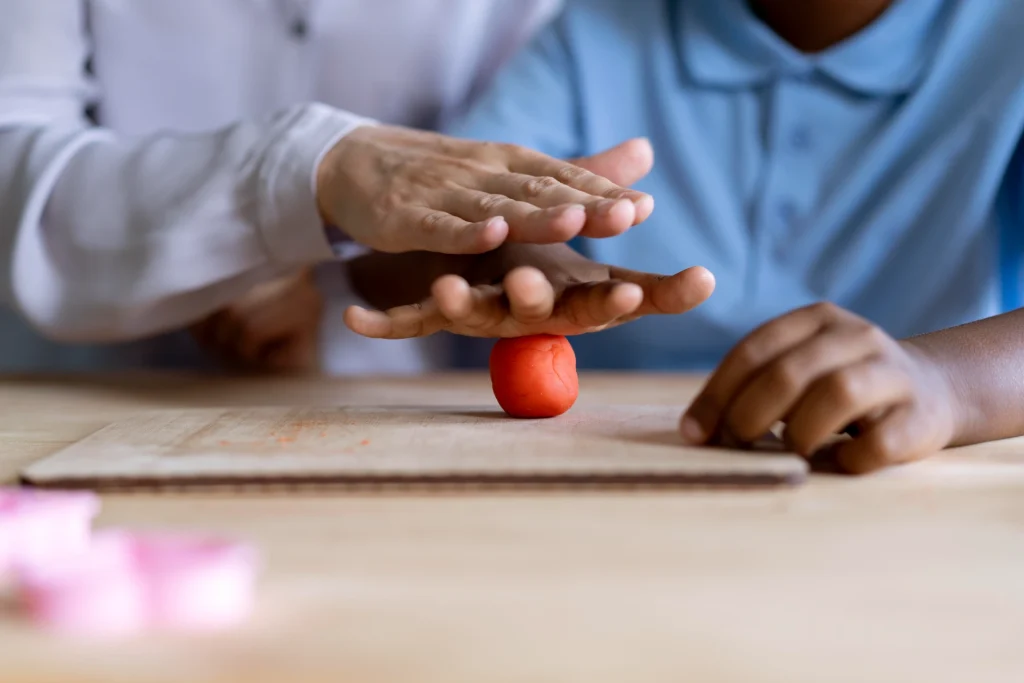

Occupational Therapy
Personalised support for developing everyday skills, greater independence, and confident participation.
At Sravana, we provide individualised occupational therapy for children and adults who experience difficulties with movement, coordination, sensory processing, learning, or everyday activities. Each therapy programme is planned around the individual’s needs and focuses on developing practical skills that support participation at home, school, work, and in the community.
What We Help With
Our occupational therapy services support:
- Fine and gross motor skill development
- Sensory processing difficulties
- Handwriting and pre-writing skills
- Coordination and balance
- Activities of daily living
- Attention and concentration
- Functional and play skills
- Developmental and learning-related difficulties
Occupational Therapy for Children
Children develop important skills through play, movement, learning, and everyday activities. When difficulties with coordination, sensory processing, attention, or motor skills affect participation, occupational therapy can provide structured support.
Our therapists use age-appropriate activities and meaningful exercises to help children develop skills needed for everyday life. Therapy may focus on hand skills, coordination, body awareness, sensory regulation, attention, handwriting, self-care, and participation in school and play activities.
For children who need additional support, occupational therapy can be coordinated with our Speech Therapy, Behavioural Therapy, and Special Education services.
Occupational Therapy for Adults
Adults may require occupational therapy when physical, developmental, neurological, or other difficulties affect their ability to manage everyday activities independently.
Our therapy focuses on practical skills and functional participation, helping individuals work towards greater independence in daily routines and activities that are important to them.
Our Approach
Assess
We begin by understanding the individual’s abilities, challenges, daily routines, and specific areas that affect participation.
Plan
A personalised therapy programme is developed based on the individual’s needs, functional goals, and priorities.
Develop
Therapy sessions use structured activities and practical exercises to develop movement, coordination, sensory, cognitive, and everyday skills.
Progress
Progress is monitored regularly and therapy goals are adjusted as the individual’s abilities and needs develop.
Frequently Asked Questions
Who can benefit from occupational therapy?
Children and adults who experience difficulties with movement, coordination, sensory processing, attention, self-care, learning, or everyday activities may benefit from occupational therapy.
Does occupational therapy help children with developmental difficulties?
Yes. Occupational therapy can support children in developing functional, motor, sensory, and everyday skills based on their individual needs.
Can occupational therapy help with handwriting?
Yes. Therapy can support the fine motor skills, hand strength, coordination, visual-motor skills, and other abilities involved in handwriting.
What are sensory processing difficulties?
Sensory processing difficulties can affect how an individual responds to information received through the senses. Occupational therapy can help develop strategies and skills for managing sensory experiences and participating more comfortably in everyday activities.
How long does occupational therapy take?
The duration varies depending on the individual’s needs, goals, abilities, and progress. A personalised therapy plan is developed after assessment.
Can occupational therapy be combined with other therapies?
Yes. When appropriate, occupational therapy can be coordinated with speech therapy, behavioural therapy, special education, and other services as part of a multidisciplinary approach.