
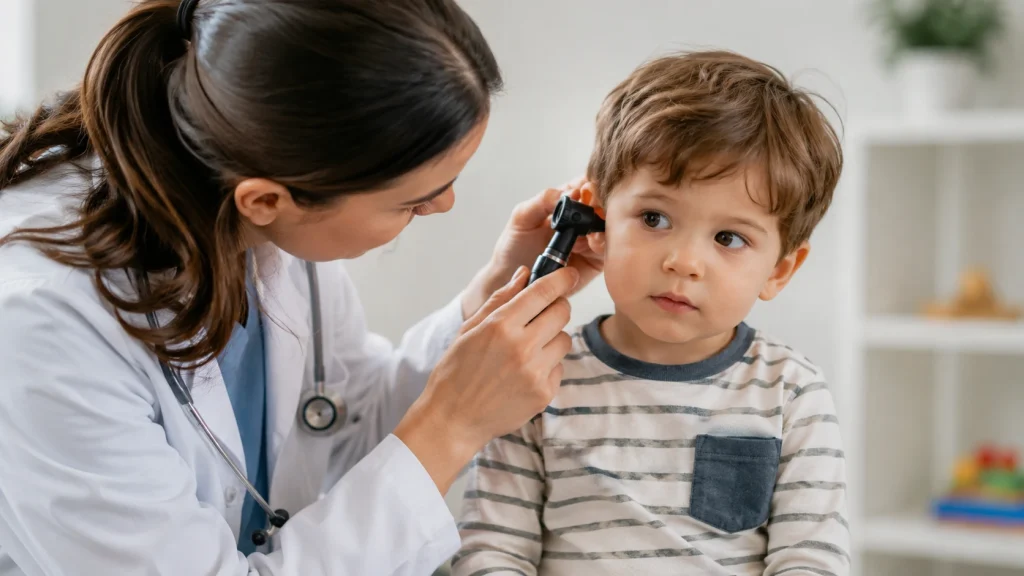
Hearing plays an important role in speech, language, learning, and social development. Sometimes hearing difficulties can be subtle and may not be obvious at home. Knowing the early signs can help parents seek support sooner.
1. Your Child Doesn’t Respond to Their Name
If your child frequently doesn’t respond when you call their name, especially when they cannot see you, it may be worth checking their hearing.
2. Speech or Language Development Seems Delayed
Difficulty hearing speech clearly can affect how children learn and use new words. If your child is not developing speech as expected or has difficulty understanding simple instructions, a hearing assessment can help identify whether hearing is contributing.
3. They Frequently Ask You to Repeat Yourself
Older children may regularly ask “what?” or ask people to repeat things. They may also appear to misunderstand conversations, particularly when there is background noise.
4. They Prefer a High Volume
If your child consistently turns the television, tablet, or other devices louder than expected, this could be a sign that they are having difficulty hearing comfortably.
5. They Watch Faces or Lips Closely
Some children naturally use visual cues to understand what is being said. Frequently watching a person’s face or lips while listening may indicate that they are relying on visual information to support their hearing.
6. They Have Frequent Ear Problems
Repeated ear infections or fluid behind the eardrum can sometimes affect hearing temporarily or persistently. If your child has frequent ear-related problems, discuss whether a hearing assessment would be appropriate.
When Should You Consider a Hearing Check?
You don’t have to wait until a child has obvious hearing difficulties. If you have concerns about your child’s responses to sound, speech development, or listening behaviour, a professional hearing assessment can help determine whether there is an underlying issue.
For more information, explore our Hearing Department or book an appointment with our team.