
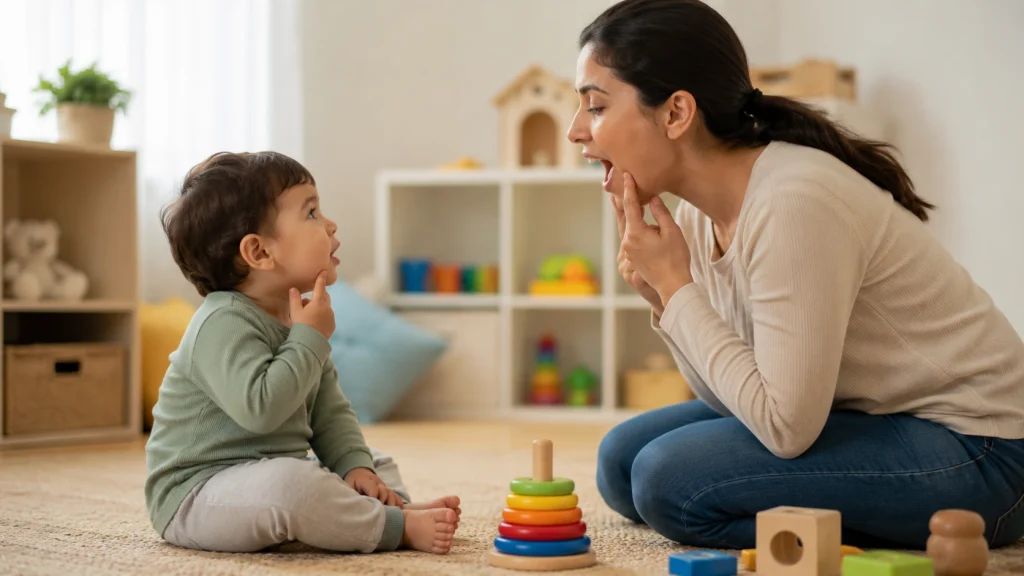
Every child develops communication skills at their own pace, but certain patterns may suggest that a child needs additional support. Recognizing possible signs of speech delay early can help parents seek guidance and support before communication difficulties begin to affect everyday interactions, learning, or social development.
Speech and language development includes more than saying words. Children gradually learn to understand language, communicate their needs, use gestures, respond to others, and form words and sentences. Paying attention to these areas can help parents understand when professional advice may be useful.
1. Limited Babbling or Vocal Sounds
Babbling is an important early step in speech development. Babies typically experiment with different sounds as they learn to communicate.
If a child has very limited babbling, rarely makes sounds to get attention, or does not appear to experiment with sounds as expected, it may be worth discussing their communication development with a pediatrician or speech-language professional.
2. Not Using Gestures to Communicate
Before children can say many words, they often communicate through gestures. Pointing, waving, reaching, showing objects, or looking toward something they want are important forms of early communication.
Limited use of gestures, particularly when combined with limited eye contact or difficulty responding to communication, may be a reason to seek professional guidance.
3. Difficulty Understanding Simple Language
Speech development is closely connected with language understanding. A child may have difficulty following simple instructions, recognizing familiar words, or understanding everyday questions.
For example, consistently struggling with simple requests such as “bring your shoes” or “give me the ball” may indicate that a child’s receptive language skills need further assessment.
4. Few Words or Slow Vocabulary Growth
As children grow, their vocabulary generally expands. Some children may say fewer words than expected for their age or show little progress in learning new words.
Parents may notice that their child relies mainly on gestures, sounds, or pulling an adult toward something instead of using words to communicate what they need.
5. Difficulty Combining Words
As language develops, children gradually begin combining individual words into short phrases and sentences.
If a child is having difficulty moving from single words to meaningful combinations, or their speech development seems to have stopped progressing, professional evaluation can help identify what may be affecting their communication.
6. Speech That Is Difficult to Understand
Some pronunciation errors are a normal part of early speech development. However, if a child’s speech is consistently very difficult for parents or other familiar people to understand, it may be useful to have their speech skills assessed.
A speech-language professional can evaluate pronunciation, sound production, oral-motor skills, and overall communication development.
7. Loss of Previously Acquired Communication Skills
One sign that should always be taken seriously is losing communication skills that a child had previously developed.
For example, if a child stops using words, gestures, sounds, or other communication skills they previously used consistently, parents should discuss this with a qualified healthcare professional promptly.
What Parents Can Do
If you are concerned about your child’s speech or language development, try to observe how they communicate throughout the day. Notice how they respond when spoken to, whether they use gestures, how they express their needs, and whether they are learning new sounds or words over time.
Talking, reading, singing, and responding to your child’s attempts to communicate can create valuable opportunities for language development. However, these activities should complement—not replace—professional assessment when concerns persist.
When to Seek Professional Support
There is no need to wait for communication difficulties to become severe before asking for help. If your child is not meeting expected communication milestones, has difficulty understanding or expressing language, or has lost previously acquired communication skills, consider speaking with a qualified professional.
An assessment can help identify your child’s individual communication needs and determine whether speech therapy, developmental support, hearing evaluation, or other services may be appropriate.
You can also explore our therapy services to learn more about the support we provide for children and families.
If you have concerns about your child’s speech or language development, book an appointment with our team to discuss your child’s needs and the next steps.