
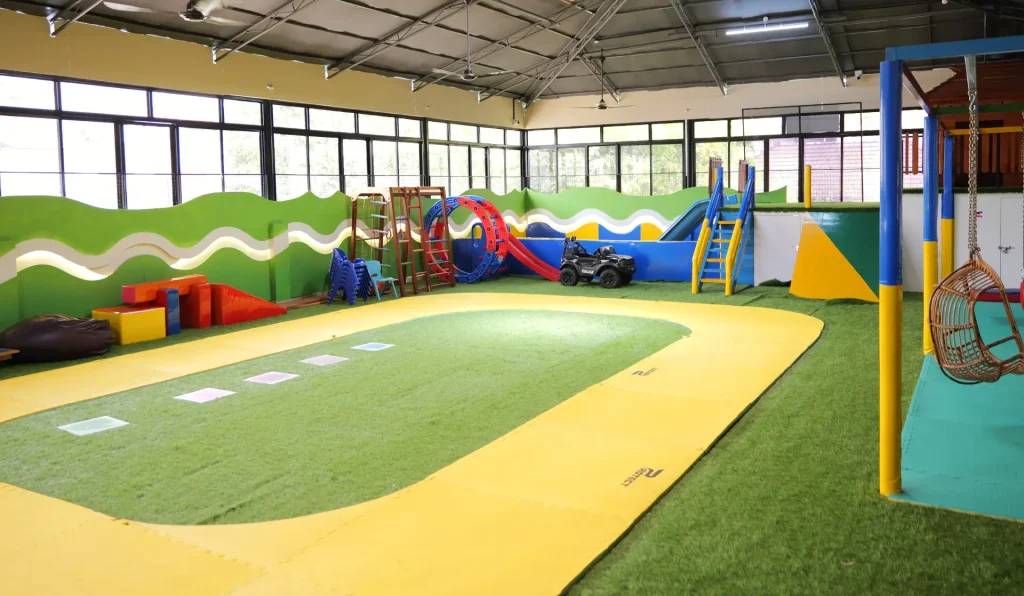
Play Therapy
Play Therapy
Play-based support for children to encourage communication, emotional expression, motor development, social interaction, and essential everyday skills.
At Sravana Speech & Hearing Centre, we use structured, goal-oriented play activities to support children’s developmental needs in an engaging, comfortable, and pressure-free environment. Play is one of the most natural ways children learn, explore their surroundings, express emotions, and interact with others. Our approach incorporates meaningful and age-appropriate activities that help children develop important skills while enjoying the learning process. Each session is planned according to the child’s developmental stage, individual abilities, strengths, and areas requiring additional support.
What We Help With
Our play therapy services support children with:
- Communication and language development
- Emotional expression and emotional regulation
- Fine and gross motor coordination
- Social interaction and relationship-building
- Attention, engagement, and participation
- Problem-solving and independent thinking
- Imagination, creativity, and exploratory play
- Behavioural development and self-regulation
- Turn-taking, sharing, and cooperative play
- Everyday functional and developmental skills
Play Therapy for Child Development
Play is an essential part of childhood development, providing children with opportunities to explore, communicate, learn, and understand the world around them. Through play, children can express thoughts and feelings, practise new abilities, develop relationships, and build confidence in their interactions with others.
At Sravana, play therapy uses structured, goal-oriented activities designed around each child’s developmental needs and therapeutic goals. Our professionals observe how children engage with toys, games, movement-based activities, and interactive tasks to understand their abilities and identify areas where additional support may be beneficial.
Therapy sessions may include activities that encourage communication, emotional expression, motor coordination, attention, social interaction, and problem-solving. These activities are adapted to the child’s age, interests, abilities, and individual pace, helping make therapy meaningful, enjoyable, and developmentally appropriate.
By creating a supportive and pressure-free environment, we encourage children to participate comfortably, explore their abilities, practise developing skills, and gradually become more confident in everyday situations.
For children who require additional developmental support, play therapy can be coordinated with our Developmental Rehabilitation and Special Education services.
Supporting Children Through Play
Children may experience different challenges as they grow, including difficulties with communication, emotional expression, movement, attention, social interaction, or learning through play. Some children may find it difficult to engage with others, follow simple activities, express their needs, or participate in shared play experiences.
Play therapy provides opportunities to practise these skills through structured activities that are appropriate to the child’s developmental level. Interactive games can encourage turn-taking and cooperation, creative activities can support expression and imagination, and movement-based play can help develop coordination and body awareness.
Our therapists select activities based on the child’s specific needs and gradually adapt them as the child develops new abilities. By encouraging participation, exploration, and positive interaction, we aim to help children strengthen their developmental skills and apply them in everyday environments, including home, school, and social settings.
Our Approach
Understand
We begin by understanding the child’s developmental history, interests, strengths, communication abilities, emotional needs, and areas requiring support. This helps us identify suitable play activities and meaningful developmental goals.
Plan
A personalised play therapy programme is designed according to the child’s age, developmental stage, abilities, and individual needs. Activities are selected to encourage specific skills while keeping the sessions engaging and comfortable.
Engage
Children participate in structured games, interactive play, creative activities, and developmentally appropriate tasks. These experiences encourage communication, emotional expression, coordination, social interaction, and problem-solving.
Develop
Through guided practice and consistent encouragement, children are supported in strengthening their abilities, exploring new skills, and building confidence. Activities are adapted to maintain engagement and address emerging developmental needs.
Monitor Progress
We review the child’s participation and progress regularly, adjusting activities and goals as needed. Parents and caregivers may also receive guidance on encouraging similar skills through everyday play and interactions at home.
Part of a Multidisciplinary Team
Children’s development involves interconnected areas such as communication, movement, emotional regulation, behaviour, sensory processing, learning, and social interaction. When children require support across multiple areas, a coordinated approach can help address their developmental needs more effectively.
At Sravana Speech & Hearing Centre, our multidisciplinary approach brings together Audiologists, Speech-Language Pathologists, Occupational Therapists, Behaviour Therapists, and Special Educators, depending on the child’s individual requirements. By coordinating therapeutic goals and sharing relevant professional observations, our team works towards providing consistent and personalised support.
Play therapy can be coordinated with Speech Therapy to encourage communication and language development, Occupational Therapy to support motor coordination, sensory processing, and functional skills, and Behavioural Therapy to address behavioural and emotional regulation needs.
For children who need broader developmental or educational support, our Developmental Rehabilitation and Special Education services can provide additional assistance tailored to their individual goals.
Frequently Asked Questions
What is play therapy?
Play therapy uses structured, goal-oriented play activities to support children’s development, communication, emotional expression, social interaction, and other essential skills. Activities are selected according to the child’s individual needs and developmental stage.
Who can benefit from play therapy?
Children who experience difficulties with communication, emotional expression, social interaction, motor coordination, attention, behaviour, or age-appropriate play may benefit from an assessment to determine whether play-based intervention is suitable.
How does play therapy help children develop?
Play provides opportunities for children to practise communication, express feelings, improve coordination, interact with others, and develop problem-solving abilities. Structured activities help encourage these skills in an engaging and supportive environment.
What happens during a play therapy session?
Sessions may involve interactive games, pretend play, creative activities, movement-based tasks, and guided social play. Activities are planned according to the child’s developmental goals and adjusted to their abilities and interests.
Is play therapy suitable for children of different ages?
Play-based activities can be adapted for children at different developmental stages. The type of activity, level of guidance, and therapeutic goals depend on the child’s age, abilities, and individual requirements.
Can play therapy help children with communication difficulties?
Play activities can provide opportunities to practise expressing needs, understanding instructions, taking turns, and interacting with others. When appropriate, play-based strategies may be incorporated into a child’s speech and language intervention plan.
Does play therapy help with emotional and behavioural difficulties?
Structured play can provide opportunities for children to express emotions, practise self-regulation, develop coping skills, and learn positive ways to interact with others. The approach is adapted to the child’s specific needs.
What role do parents play in play therapy?
Parents and caregivers can support development by encouraging appropriate play activities, practising communication and social skills, and creating opportunities for positive interaction at home. Therapists may provide guidance on incorporating these activities into everyday routines.
How long does play therapy take?
The duration depends on the child’s developmental needs, goals, participation, and progress. Therapy goals and activities are reviewed regularly and adjusted according to the child’s changing requirements.
Can play therapy be combined with other therapies?
Yes. Depending on the child’s needs, play-based activities can complement speech therapy, occupational therapy, behavioural therapy, developmental rehabilitation, and special education as part of a coordinated intervention plan.